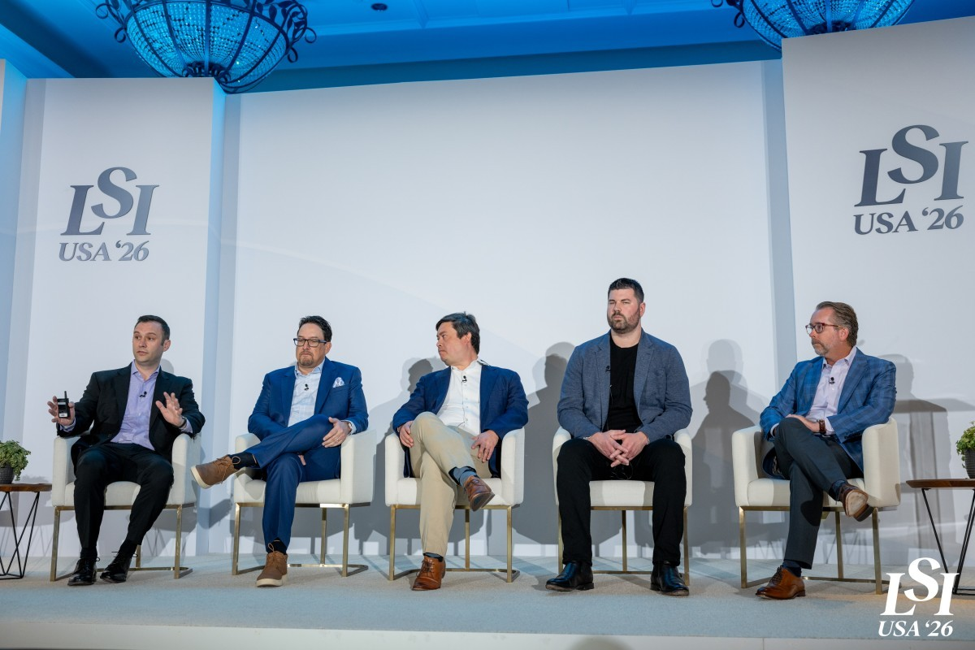
The LSI Dana Point conference was filled with industry leaders sharing their perspectives on strategic medical technology acquisitions, the allocation of capital, new technologies, and the changing dynamics between start-ups and established medical device firms. The panel was called “Medtech M&A: An Optimist’s Perspective on the Future of Medtech” and featured executives and investors from EY-Parthenon, Medtronic, Evercore, Vensana Capital and Edwards Lifesciences.
John Heinbigner, Partner at EY-Parthenon, moderated the conversation with Chris Eso, VP, Global Head of Corporate and Business Development, M&A and Ventures at Medtronic; Bennett Blau, VP, Senior Managing Director with Evercore; Greg Banker, Partner, Vensana Capital; and Chad Rice, Senior Vice President of Corporate Development, Edwards Lifesciences.
Their views pointed to a market where strategic buyers are still active, but motivated agents are more demanding. In order to attract investment or acquisition, companies need to have more than just great technology. Opportunities that are clinically relevant, are ready for commercialization, have strategic fit, and are built on trusted relationships are all key factors in securing capital.
While market fundamentals continue to be robust, capital is being picky.
The discussion commenced with an overview of the market for MedTech. Heinbigner said that the industry expanded at about 6% in 2025, buoyed by underlying demand, procedures and capital expenditures.
But the fundamentals haven’t manifested completely in public market performance. Valuations of MedTech companies have been under pressure, leading to a mismatch between industry growth and investor sentiment. The landscape is also been conducive to a selective initial public offering (IPO) market, especially for businesses that are yet to achieve regular commercial performance.
The market environment is “a very schizophrenic market environment,” Blau said, noting that it was different from the performance of the equity market as a whole and the healthcare and MedTech markets.
Such market conditions have repercussions for investors as well as for the growth companies. In times when the public markets are stressed, businesses might have to provide more solid evidence of growth, commercial viability and strategic differentiation to draw in investment.
This underscores the need to assess companies based on their clinical and commercial potential, and not just on market momentum, for the medtech venture capital ecosystem.
The importance of growth in MedTech M&A in 2026
Acquisition activity continues to be led by growth as a main motivator for strategic buyers. But, due to the decreasing number of scaled, high-growth public MedTech companies available, options for larger companies looking to acquire a company that can make a meaningful contribution to revenue growth are shrinking, Blau said.
When you consider all the public assets that exist in the medtech out there, they’re not enough really to move the top-line profile of some of the acquirers here, Blau said.
This scarcity has given differentiated assets a greater strategic significance. Blau says the growth in revenue is more important in valuation conversations than ever since the COVID-19 pandemic. He said every percentage point of revenue growth used to equate to about one turn of the EBITDA valuation but it is now about two-and-a-half to three turns.
How Strategic Buyers approach Acquisitions and Medtech Partnerships
The panel shared varying views about the medical device industry decision-making and investment process of established medical device companies.
But the notion that Medtronic had backed off from acquisitions was challenged by Chris Eso. The company is still making acquisitions, including smaller deals that aren’t considered big enough for public announcements, he said.
“No I don’t think we went anywhere,” Eso replied. Looking back over the past couple of years, he says they’ve completed five or six acquisitions each year, but they’re not material” and that’s why they’re not announced.
He explained that Medtronic’s philosophy is “a continuous investment and acquisition strategy, whether it’s a minority investment, structured transactions, or acquisitions at various stages of company development.
Medtronic Ventures is important in this context because strategic priorities and opportunities within the medical technology ecosystem are linked together. Knowing what types of investments a corporate investor is interested in and what areas of the business he or she is interested in can help get the discussions off to a more successful start as a founder.
While AI has potential to deliver significant benefits in healthcare, its impact on investment is tied to clear clinical value.
The areas explored as having strategic interest included AI, robotics, interventional technology, vascular solutions and neurotechnology. But the panel warned against the temptation to invest in emerging technology just because it’s getting the attention of the marketplace.
According to Blau, for AI to make a difference and be strategically valuable, it needs to have a direct link to improved clinical outcomes and patient care.
I think that’s extremely important, that you can tie that into patient care and why that makes a difference, not just because it’s AI and that’s what’s trending, but because it’s patient care that’s impacted, that’s what’s important,” Blau said.
A similar sentiment was shared by Eso from the Medtronic point of view.
“They’re not just looking to purchase AI for the purpose of purchasing AI,” Eso said. “It has to be connected to a therapy that actually is going to improve the adoption, the outcomes, the placement, the deployment, whatever.”
Rice pointed out the need for making the use of AI technologies more action-oriented in the medical device industry.
The AI needs to do something to make it my medical device world,” Rice said.
When it comes to important features of an attractive AI solution, Banker noted that many of them exhibit certain qualities similar to those of existing MedTech products. They cover factors such as regulation, engagement of surgeons, incorporation into clinical routines, and a clear connection with surgery or therapy.
The insights gained from these observations highlight the need for startups to showcase tangible clinical value, tackle workflow challenges, and build a realistic trajectory to adoption when designing AI-powered medical innovations. The technical ability of a technology is not the only factor that determines its commercial viability; the ability of the technology to fit within the context of healthcare delivery in the real world is also crucial.
What makes a MedTech Startup an acquisition priority?
While every strategic buyer has a unique set of priorities, the panel identified common attributes that impact buyer decisions: such as a compelling clinical need, differentiated solution, strategic relevance, and solid business operations.
“If it’s a business that’s solving a problem that’s important for the potential buyer or their customers, it’s something that the potential buyer doesn’t currently have, and it’s giving them a reason to act before the competitor has access to it, then the company becomes more interesting,” Banker said.
“If you don’t meet those three things, I think you’re probably more likely to be a nice-to-have [than] a must-have,” Banker said.
This is important to understand for founders who are looking to invest or get acquired. Technical innovation isn’t always it’s own good remedy. Companies need to showcase how their products fit into the unstated needs of their customers and/or how they fit into the current product lineup, or how they provide a customer a defensible competitive advantage.
Rice warned that heed must be taken to the potential of rushing commercialization before the fundamentals of both the business and the product are ready. He said that sometimes firms require a quick turnaround in cash flows to raise their worth, albeit their quality management, cost of goods, and supply chain are not ready.
“Stabilize the base business, make sure that that works, and then think about commercialization,” Rice said.
Operational readiness can impact a company’s acquisition value and commercial success, particularly for start-ups. The ability to scale a business beyond just a product or clinical milestone can be shown through reliable manufacturing processes, an appropriate quality system, and a realistic commercialization strategy.
Another key element was highlighted by Eso, transparency.
“Be honest with where you’re at, where you know you have a deficiency, where you don’t,” Eso said. We’ll know, we’ll do the homework and that’s a major trust that you might or might not have.”
Successful transactions, Blau added, are a team effort.
“A very high percentage of those deals is more about partnership than negotiation,” Blau added. I think that’s a culture of trust in arming with these guys, that’s just so incredibly important,” she said.
All of these have indicated that there is a need for strong clinical differentiating, commercial discipline and credible communication in strong acquisition candidates. Founders who are aware of their own strengths and weaknesses, communicate effectively about their strategic importance, and establish connections early are more likely to be able to deal with negotiation with prospective purchasers.
A business plan for the medical devices sector funding ecosystem: MedTech Venture Capital and Corporate Investment: What Comes Next?
The panel finished on a hopeful note, with some degree of optimism regarding future capital investments. Medtronic’s investment through minority investments, early investments, structured transactions and acquisitions will add up to $2 billion to $3 billion in the next 12 to 18 months, Eso said.
Blau also noted that there is an opportunity to shift capital to and from healthcare and MedTech, as they are assessed with other industries, such as technology and software.
As a general trend, these observations indicate that there are opportunities for differentiated ventures in the medtech VC market, but that capital decisions and acquisitions will be based on strategic relevance, proof of value and business strength.
In this context, the roles of corporate investors and established device manufacturers can complement each other. Strategic partnerships can offer knowledge of market needs, potential applications and longer term acquisition opportunities, while venture capital can assist in a company’s development and commercialization.
That being said, there is a difference between access to capital and guaranteed funding, and there is no guarantee of the path to acquisition. There is still work to be done to show the world why the company’s tech is important, how it can get to market, and why it’s insightful to a future strategic partner.
The bottom line is that the building needs to be built with a long-term impact on its value for strategic purposes.
When it comes to the 2026 MedTech M&A market, the discussion at LSI Dana Point was a reminder of a key factor: enthusiasm for deals doesn’t signify that all companies will be attractive to investors or interest in acquisition.
While strategic buyers are active, they are looking to evaluate businesses with a focus on growth, clinical impact, portfolio fit and commercial readiness. The most effective way to embark on strategic relevance for medtech startups starts with identifying a relevant clinical problem and developing a company capable of a vigorous assessment.
The panel also encouraged the importance of relationships. Early-stage medtech partnerships can be valuable for helping founders know what to prioritize and appropriate communication and operational discipline can build investor confidence throughout the investment and acquisition lifecycle.
As the industry continues to change, the companies that will thrive will be those that have differentiated technologies, compelling clinical data, scalable operations, and an understanding of where and how they fit the future of healthcare.